
IT at fixed prices
Many advantages for the customer

IT systems houses are increasingly moving towards offering their IT services at fixed prices. Where software used to be purchased once, regularly updated with maintenance contracts and updates, and billed according to the actual effort involved, most providers have now switched to a fixed monthly flat rate. This approach is convincing!
Table of contents
Why IT services at fixed monthly prices?
Why do more and more IT systems houses offer their services at fixed monthly prices? Fixed-price models provide a reliable and transparent basis for IT services. This fosters trust and improves planning certainty for both the customer and the IT company. It thus strengthens customer loyalty and increases competitiveness in a market that relies on clear pricing structures and dependable partnerships.
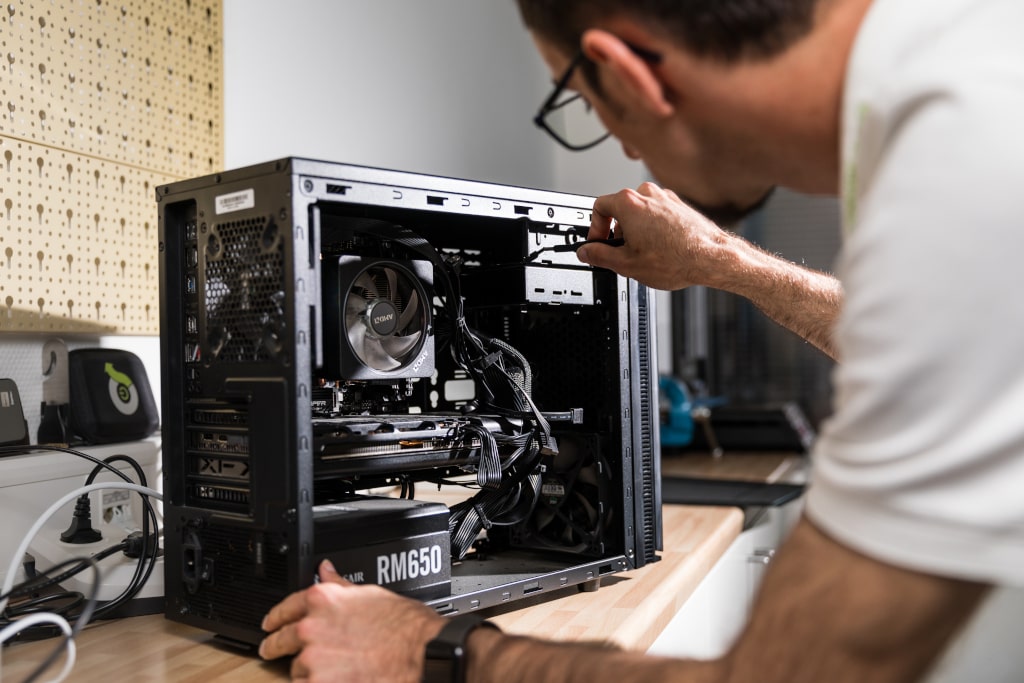

In addition, IT systems houses are also struggling with the ongoing shortage of skilled workers in their industry, while at the same time the need for support is growing. This inevitably leads to a deficit and, in addition, to a need for action. IT systems houses must therefore continuously improve their efficiency in order to maintain high service quality despite reduced staff. What this can look like is outlined below.
What are the advantages of IT support at fixed prices for the customer?
Increased IT security
Providing security for computers and networks is not a one-off task – it is a continuous process. Since there are constant changes and adjustments on the part of attackers as well as on the protection side, IT security must be reviewed regularly and, above all, proactively.
This requires an appropriate maintenance contract that also includes this work for adapted and better protection and keeps an eye on all components. As is well known, the weakest link often becomes the gateway, so it is extremely important that IT is supported and maintained uniformly for the entire company. Not infrequently, an inconspicuous component such as the inverter of a photovoltaic system or a simple VoIP telephone becomes a threat to the entire company network.
Predictable IT costs without strong fluctuations
Anyone who has ever had their IT services billed according to the actual work involved knows the enormous fluctuations in these invoices. Server migrations or simple troubleshooting become incalculable. Even if there is “seemingly” less to do between the individual incidents or jobs, the unforeseeable and unplanned incidents are still noticeable cost drivers.
With fixed-price support, these fluctuations are significantly smaller and also more predictable. There are no financial surprises here. Even if a job does not work as desired at the first attempt, there is no need to think long about whether the second attempt to solve the problem has to be dropped for cost reasons.
Efficiency through automation and proactive maintenance
Many IT service providers nowadays work with modern automation technologies. What primarily serves the IT service provider also offers the customer significant added value.
By automating IT processes (e.g. for data backup, system monitoring and software installations), IT systems houses can significantly reduce their error rate. Regular, automated checks and targeted monitoring increase the security of IT systems. In view of the constantly growing threat of cyberattacks, this is essential for customers and is also often listed by cyber insurers as a basic prerequisite for an insurance payout. Potential vulnerabilities can also be identified and remedied more quickly this way, before a critical problem arises.
Two prerequisites are necessary to achieve good and efficient automation: firstly, that the billing of individual services does not have to be clarified in advance every time, as this leads to considerable organisational and cost-intensive additional effort. Secondly, IT that is as homogeneous as possible is required so that separate automations do not have to be created for each system. In short, the customer benefits above all when their fixed-price IT support can work proactively and, wherever possible, all IT systems are looked after by a single provider.
Continuous IT optimisation for greater reliability
Without information technology, hardly anything works in most companies any more. Nevertheless, IT is not given this importance everywhere. Even today, there are still some IT administrators who limit themselves solely to simply keeping the system running. But functioning IT is not automatically secure and reliable IT! Especially when things have to happen quickly, some IT administrators are not always so meticulous and focus on fixing the acute problems. Typical consequences can be “Everyone” shares or administrator users named “Admin” or “Administrator”. Two-factor authentication is also quickly left deactivated. If the company is then hacked, it is unfortunately far too late! The costs and the loss of reputation are significantly higher than those of continuous, targeted and secure IT optimisation.
Solving problems sustainably
As already mentioned, time pressure is the enemy of reliability and IT security. Solving acute problems, however, almost always takes place under time pressure, as every IT administrator is keen to get the customer working with the system again quickly. Proactive IT support and maintenance at fixed prices can identify potential problems before they lead to bigger sources of error and high costs. Forward-looking IT support can make important adjustments in a planned manner and without time pressure. Problems can thus be viewed holistically, thought through and solved sustainably.
Modern IT for flexible adjustments
“Those who do not move with the times will be moved out by the times.” This is not just a trite saying, but hits the nerve of the rapidly changing IT industry very well. This industry in particular is in a state of constant change, and anyone who does not regularly check and optimise their systems will not benefit from this change or may even be overtaken by it. An example: 50 years ago it was floppy disks, then about 30 years ago hard disks came along, for about 15 years it has been SATA/SAS SSDs, and anyone who is not yet using an NVMe SSD (Non-Volatile Memory Express) today will spend unnecessary time waiting, as this technology offers significantly higher data transfer rates.
With regard to server systems, too, it has been clear in Germany since the coronavirus pandemic at the latest that, particularly for medium-sized businesses, there is generally no longer any alternative to cloud systems. Reactive IT support, however, will only address such developments at the earliest when the customer demands it or when it becomes necessary unplanned due to an acute problem. It is better, however, to check sensible adjustments regularly and implement them in a planned manner!
Hand over responsibility and concentrate on your core business
Who, if not an IT professional, can take better care of your IT systems? The world is becoming ever more complex, and IT systems are certainly no exception. For entrepreneurs, it is hard enough to concentrate on their core business in this VUCA world. So why not let the work be done by professionals who deal with bits and bytes out of passion?
No more wondering whether to solve problems yourself for cost reasons
Anyone who has IT support on call knows the thought of whether they should quickly solve a problem themselves in order to save costs. Not infrequently, however, it then turns out that the small problem is not so small after all, or that solving the problem has even created a new one. Often, solving the problem afterwards through IT support then even costs more than if the IT specialist had solved the problem right from the start. With IT support at fixed prices, you can have your IT matters handled directly by a specialist at no extra cost.
One point of contact for all IT areas
IT systems in companies are usually quite extensive in their overall scope. Usually there are 5-10 different contacts (industry software, internet provider, network, telephony, servers, PCs) to cover all IT areas. Without expert knowledge, you quickly find yourself “caught in the middle” when the responsibilities for solving problems that arise are passed from one contact to the next. In some companies, the individual contacts even work without sufficient control or in a way that does not suit the company’s network. In order to create IT that is as homogeneous as possible, good IT systems houses therefore support the widest possible range of IT systems. They also give external IT partners clear guidelines and, wherever possible, restricted access rights to the IT landscape. This pays off for the security and reliability of the entire company.
Team know-how instead of an all-knowing lone fighter
Information technologies have now become so comprehensive that it is impossible for a single IT administrator to be well versed in all areas. Even individual specialist areas such as VoIP or server systems have become so complex that only the expertise of several specialists can lead to an optimal solution. A good systems house can draw on a sufficient network of experts for any question and thus offer a modern, secure and optimised solution.
Conclusion
IT support billed according to effort usually only ensures that the systems run superficially and are made functional again under time pressure in the event of a problem. IT security and operation in which problems hardly ever occur are only possible with fixed-price support, where work can be done proactively and with the help of automation. At the same time, fixed-price models create transparency, offer planning certainty for customers and the IT systems house, and form the basis for a cooperative partnership.